How do facial proportions influence the appearance of aging?
Discover how facial proportions, bone structure and volume influence the appearance of aging and what options exist to restore facial harmony with an expert medical approach.
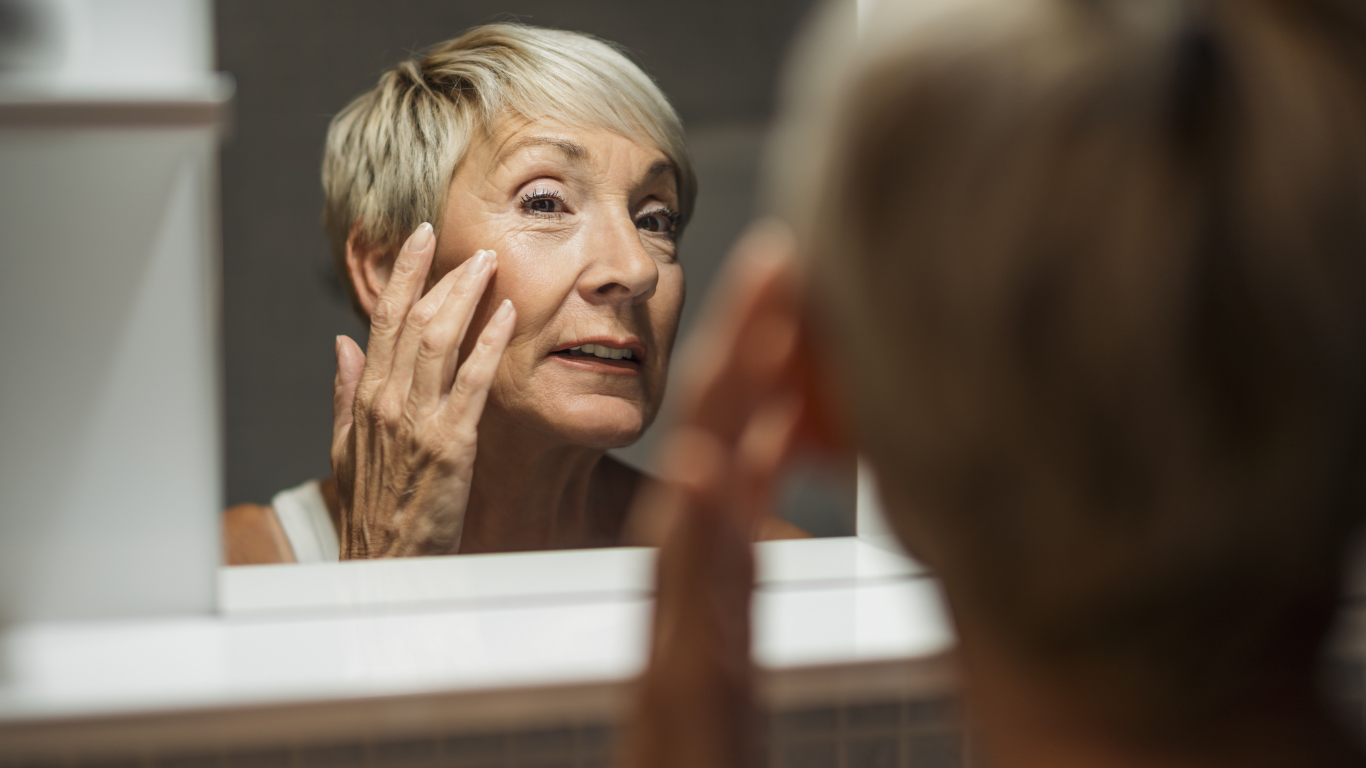
There is a moment in front of the mirror when you don't know how to explain what changed. It's not a specific wrinkle or a new stain. It's a deeper feeling: your face doesn't look the same anymore, even if you can't pinpoint a single cause. That perception has less to do with the skin and more to do with Facial proportions that your brain interprets automatically.
From a very young age we learn to read faces. In thousandths of a second we evaluate youth, tiredness, health or vitality. We don't do it by counting wrinkles, but by observing equilibriums: volumes, angles, distances. When these balances are altered over time, the face transmits aging even if the skin is still relatively good.
That's why there are people who look young for decades and others who, even without too many wrinkles, look older sooner. The difference is often in how their bone and soft tissue proportions have changed, not just on the skin surface.
Understand How facial proportions influence the appearance of aging is key to making realistic, informed decisions aligned with your identity. In Dr. Richer's clinical practice, this analysis is the starting point for any serious and natural aesthetic strategy.
The importance of facial proportions in aging
The face does not age in a flat or uniform way. It ages in three dimensions. Facial proportions determine where shadows appear, where support is lost and which areas begin to visually dominate others. When that balance is broken, the brain interprets age.
Two people with the same amount of wrinkles can look radically different if one maintains good structural proportions and the other does not. This is why modern approaches to rejuvenation no longer focus on “stretching skin”, but on restore anatomical relationships.
What are facial proportions and why do they determine appearance
The facial proportions are the size, position and volume relationships between forehead, orbits, cheekbones, nose, lips, jaw and Chin. They are not evaluated in isolation, but as a system.
A well-positioned cheekbone supports the middle third of the face and prevents skin from falling into the nasogenial grooves. A chin with adequate projection keeps the mandibular line defined and reduces the appearance of a double chin. Facial height and width influence how sagging is distributed.
When these proportions are harmonious, the face projects youth even with lines of expression. When altered, signs of aging appear even though the skin is relatively smooth.
How proportions change over time
With age, it's not just the skin that wrinkles. A progressive bone resorption, especially in the maxilla, orbits and mandible. This reduces structural support and modifies the shape of the face from within.
At the same time, facial fat does not disappear homogeneously. Some compartments atrophy and others shrink due to the severity and laxity of SMAS. The result is a face that loses projection above and gains volume below, one of the clearest signs of facial aging.
By producing less collagen and elastin, the skin is no longer able to adapt to these structural changes. This generates folds, grooves and sagging that are not explained only by chronological age.
Key anatomical changes that alter the perception of age
To understand how facial proportions influence the appearance of aging, it is necessary to analyze what structures change and how those changes are visually translated.
Bone resorption and loss of facial support
The facial bone reabsorbs slowly over the years. The orbits enlarge, the maxilla loses projection and the mandible becomes less defined. This makes the eyes appear sunken, the nose longer and the chin less marked.
Although these changes are subtle, their visual impact is enormous. When bone support is lost, skin and fat descend, altering proportions that previously transmitted youth and firmness.
Fat redistribution and tissue loss
Facial fat is organized in compartments. As we age, some empty out, especially in the cheekbones and temples, while others descend to the lower part of the face.
This phenomenon explains why deep circles under the eyes, marked nasogenian grooves and puppet folds appear. It's not excess skin, but volume loss and shift, which breaks facial balance.
SMAS relaxation and its impact on the facial oval
The SMAS is a fibromuscular layer that supports facial tissues. Over time, it loses tension, allowing muscles and fat to fall.
When the SMAS relaxes, the facial oval blurs, the jaw loses definition and the face takes on a heavier, aging shape. That's why treatments that act only on the skin have limited results.
Facial biotypes and aging patterns
Not all faces age the same. The facial biotype determines which proportions are altered earlier and how the signs of aging are manifested.
Brachifacial face and aging
The brachifacial face, which is wider and shorter, tends to maintain volume for longer, but it loses mandibular definition easily. Aging is more manifested as flaccidity than as subsidence.
Mesofacial face and balanced aging
The mesofacial area has more harmonious proportions. Its aging is usually progressive and responds well to volume restoration and structural support treatments.
Dolichofacial face and early volume loss
The dolichofacial, long and narrow, tends to lose volume in the cheekbones and chin. This further lengthens the face and accentuates the aged appearance if not strategically corrected.
Dr. Richer emphasizes that identifying the facial biotype is essential for any plan of rejuvenation qthat seeks naturalness and anatomical coherence.
Proportions, symmetry and the perception of beauty
Facial beauty does not depend on perfect features, but on balance and coherence. Our brain associates certain proportions with youth, health and attractiveness.
The golden ratio as an aesthetic reference
The golden ratio is used as a guide for analyzing facial distances. It's not a rigid standard, but it helps identify imbalances that can be corrected to improve harmony and perception of youth.
In aesthetic medicine, it is used to plan fillers, surgery or combined treatments that respect facial identity.
Facial symmetry and aging
Symmetry is lost with age due to uneven loss of volume and support. Restoring volume at strategic points can restore balance without erasing unique features.
Absolute symmetry is not desirable. The key is in harmonize, not in standardizing.
Cultural influence on the perception of proportions
Beauty ideals vary according to culture, era and social context. That is why good treatment does not pursue a universal model, but rather proportions that fit the patient's identity, gender and ethnicity.
Visible manifestations of aging related to proportions
Facial proportions determine how and where signs of aging manifest.
Wrinkles according to facial morphology
The shape of the face and muscle action influence the type of wrinkles. Some faces first mark the forehead, others the eye contour or the perioral area.
Dynamic wrinkles reflect muscle movement. Static ones usually indicate loss of volume and support.
Loss of volume and change of the facial oval
The loss of projection on the cheekbones and mandible alters the facial oval. The face changes from a more inverted triangular shape, associated with youth, to a more square or heavy one, associated with aging.
Double chin and mandibular dislocation
A double chin isn't always fat. It is often the result of a poorly projected jaw and loss of bone support. Correcting proportions can improve it even without removing tissue.
External factors that accelerate proportional changes
Facial aging isn't just genetic. Lifestyle plays a decisive role.
Sun exposure and structural degradation
UV radiation degrades collagen and elastin, accelerating sagging and altering proportions. Constant photoprotection is one of the most effective tools for preserving facial structure.
Lifestyle habits and skin care
Tobacco, alcohol, poor nutrition and lack of sleep directly affect tissue quality and facial fat distribution. Proper care helps maintain proportions for a longer time.
Aesthetic treatments oriented to proportions
Fillers, biostimulators, botulinum toxin and surgery must be used with a structural approach. The goal is not to “fill”, but reconstruct anatomical relationships.
Frequently Asked Questions About Facial Proportions and Aging
At what age do facial proportions start to change?
The first subtle changes may appear in your late 20s. After 40, structural alterations become more evident, especially in the mandible and middle third.
Why do some people look older without a lot of wrinkles?
Because the perception of age depends more on shadows, volumes and support that of isolated wrinkles. Loss of proportions ages before fine lines.
Can lost facial proportions be regained?
In many cases, yes. With well-planned treatments, volume, support and balance can be restored, improving appearance without changing identity.
Do all aesthetic treatments improve proportions?
No. Only those who consider the overall anatomy of the face. That's why expert evaluation is key to avoiding artificial results.
Regaining proportions is regaining identity
Facial aging is not a sum of defects, but a transformation of proportions. Understanding how facial proportions influence the appearance of aging completely changes the way we approach aesthetics.
When the focus is on restoring balance, support and harmony, the results look natural, consistent and lasting. This is the philosophy that guides Dr. Richer's work: to intervene judiciously, to respect anatomy and to prioritize the identity of each face.
If you feel that your face no longer reflects how you feel inside, you may not need to “look younger”, but Go back to see you. A professional analysis of your facial proportions can be the first step.
